Check out what is new in Poultry Industry
Find the best technical articles, forums, and videos on Poultry Industry at Engormix. Enter now and interact with the world's largest agricultural social network.
Featured comment:

Hello, Dr., your research is valuable. Performing and achieving slaughter weight requires factors such as genetic capacity and ideal environmental conditions. And this issue of raising and achieving a chicken weight of about 2850 is only possible under conditions of high-precision experiments in feeding and monitoring chicken movements, but in practical conditions in poultry farms of different countries, both modern and non-modern, sometimes with problems associated with this. First, feeding...
Comments : 17
Recommendations: 6
Featured comment:
Hello, Dr., thank you for your comments. It is a good suggestion. There is one issue. Betaine is known as a methyl group donor that may change the course of the experiment and record new data. And if it plays a role in heat stress, we should look at the role of betaine in the production of glucose because the only way to get rid of stress is to produce glucose and maintain the body's sugar level so that the general line of defense of the body can be active and effective in the event of a...
Comments : 14
Recommendations: 1
Recommended events
January 25, 2027
United States - Georgia - Atlanta


Andrew Flemming (HATO Agricultural Lighting) shares a Technical overview of spectrum design, light placement, and photoperiod management in cage-free aviary systems ...
Comments : 0
Recommendations: 2



Anita Menconi, Regional Business Director for Specialty Nutrition, Americas at Evonik, shares her perspective on how specialty nutrition will support animal health and performance toward 2026. She also addresses how nutrition and gut health solutions can help maintain productivity as antibiotic use in animal production continues to decline. ...
Comments : 0
Recommendations: 0
Featured users in Poultry Industry






Featured comment:


@Mahamud Shimul Dear Shimul, Thank you so much for your kind comments. 1---Current Market Conditions (May–June 2026) Mainstream Prices: Ex-factory prices in major producing regions range from USD625 to USD675 per tonne (excluding tax). This represents a doubling compared to the 2024 average price and is within a historically high range. 2---Market Characteristics: Strong cost support: Phosphate rock prices remain stable at high levels; although...
Comments : 2
Recommendations: 0


Prof. Dr. AS RANADE breaks down India’s toughest year of mortality and disease impact. He explains why egg consumption must rise and which technologies remain underused in nutrition. ...
Comments : 0
Recommendations: 1
.jpg&w=3840&q=75)


Dr. Sharad Singh, Head of All India Operations for the Sapan Group and President of the Broiler Integration Association of Uttar Pradesh, shares his vision for 2030. In this video, he discusses the vital role of advertising and marketing in increasing the per capita consumption of chicken and eggs. Dr. Singh also emphasizes the importance of public-private partnerships and the implementation of the FSSAI Act to ensure industry transparency. ...
Comments : 0
Recommendations: 0


Dr. Jitendra Varma shares an optimistic outlook for India’s poultry sector, driven by continuous growth of 6–8% annually and a rising national demand for high-quality, affordable protein. With India’s population projected to reach 1.5 billion by 2030, he emphasizes that poultry will play a crucial role in meeting the country’s nutritional needs.
...
Comments : 0
Recommendations: 0
Veterinary APIs Market Update: Price Trends & Key Insights – February 2025
Suggested link


1. Introduction Intense genetic selection, combined with an effective feeding program and efficient rearing management greatly improved productivity and efficiency of broiler production [1]. Despite the low genetic variation and well-controlled rearing environment in modern broiler production, there can still be noticeable variations in body weight (BW) within a flock [2]. Ideally, broiler production wants to produce homogenous products for production efficiency [3]. High variations...
Comments : 0
Recommendations: 0
Introduction Whereas modern broilers have low genetic variation and wellcontrolled rearing environment, there are still high variations in BW within a flock (Lundberg et al., 2021). While uniformity is a universal issue in poultry production, there are still no cost-effective interventions other than culling heavy and small birds to improve uniformity within a broiler flock (Choi et al., 2026). Poor uniformity can cause tremendous economic loss mainly by decreasing efficiency...
Comments : 0
Recommendations: 1
.jpg&w=3840&q=75)

Veterinary APIs Price Index (VPi): May 7th 67.27 May 13th 67.03 May 20th 66.95 May 27th 66.79 The veterinary APIs market is currently exhibiting a generally weak and stable trend, characterized by a persistent divergence in patterns—showing more declines than increases, alongside subdued trading activity primarily influenced by essential demand. The prices of doxycycline hyclate, tylosin tartrate, tiamulin, and...
Comments : 2
Recommendations: 0


Introduction Global consumers have ongoing concerns about the effects of animal production systems on animal welfare and their effects on quality attributes of food products from intensive production systems [1]. Due to consumer concerns, research on animal welfare has been strengthened [2]. Welfare has become one of the most important and essential topics for modern animal production because animals are sentient beings capable of suffering and experiencing emotional states [3,4]....
Comments : 1
Recommendations: 0

Feed Granulometry and the Importance of Feed Particle Size in Layers
Suggested link



Fabiano Favarin, Global Business Director – Vitamins at Adisseo, discusses ongoing investment in vitamin technology, highlighting improvements in physical characteristics, reduced dust generation, enhanced premix homogeneity, workplace safety benefits, and the operational and economic impact of optimized vitamin handling. ...
Comments : 0
Recommendations: 0


Introduction The modern poultry industry is under increasing pressure to optimize efficiency following the phase-out of antibiotic growth promoters (AGPs). To achieve this, we must prioritize gastrointestinal tract (GIT) health to ensure effective nutrient...
Comments : 0
Recommendations: 2

Dr Swati B, a veterinarian and technical team member at ABTL, addresses the growing challenge of antimicrobial resistance in poultry production. She explains how natural, synergistic solutions can reduce pathogenic load, improve gut health and immunity, and support antibiotic-free poultry systems aligned with One Health principles. ...
Comments : 0
Recommendations: 1


Lukas Bauer, Portfolio Development Manager at Evonik Animal Nutrition, explores how spore germination and outgrowth determine probiotic function after ingestion. The discussion also highlights insights from a new in-vitro digestion model and explains why the timing of outgrowth is critical when managing gut health and disease risk in poultry production. ...
Comments : 0
Recommendations: 2


FIGAP 2026: The Scientific And Technological Exhibition Of The Livestock Industry
Suggested link


Victor Naranjo, Technical Director at Evonik Animal Nutrition, explains the main challenges nutritionists face when designing more precise feeding programs. He also highlights the benefits of nutrient-modelling tools like AMINOSpec® and shows how diet customization helps improve efficiency and resource utilization in animal production. ...
Comments : 0
Recommendations: 2


Dr. Sayantani Sihi Arora, Chief Scientific Officer at Agrivate Research & Advisory, explains how molecular diagnostics are transforming poultry disease detection. From faster, more accurate identification to distinguishing vaccine strains from field strains, she highlights why these tools are becoming essential for farmers—despite challenges in awareness and sample handling. Her insights reveal a future where early detection and proactive monitoring reshape poultry health...
Comments : 0
Recommendations: 0
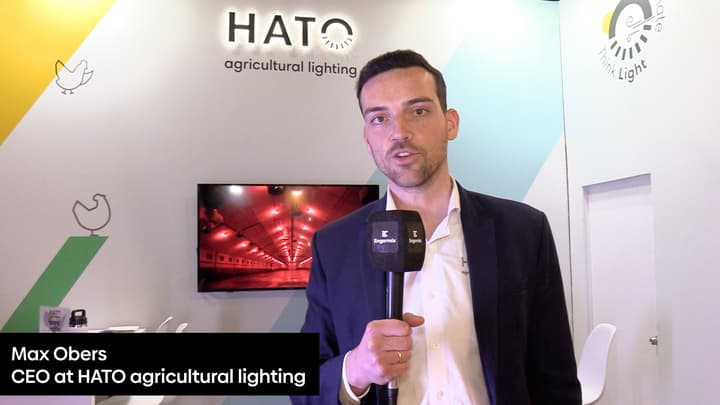

Phil Kemp, Microvit Business Manager, North America (Adisseo), explains liquid dispersible vitamins (DLCs), natural pigments, and the MicroVit quality control system (MCS), focusing on heavy metal testing and how cross-linked gelatin technology helps protect vitamin A stability during feed processing and storage. ...
Comments : 2
Recommendations: 2
Adisseo updated its Microvit ® Nutrition Guide, reenforcing its commitment on vitamin nutrition close to feed producers. Producing vitamins for over 70 years and always focused on supporting the feed industry for improved animal...
Comments : 0
Recommendations: 1