Mineral Nutrition of Dairy Cattle
Published: January 23, 2008
Source : Barney Harris, Jr. - University of Florida Cooperative Extension Service
MAJOR MINERALS AND VITAMINS
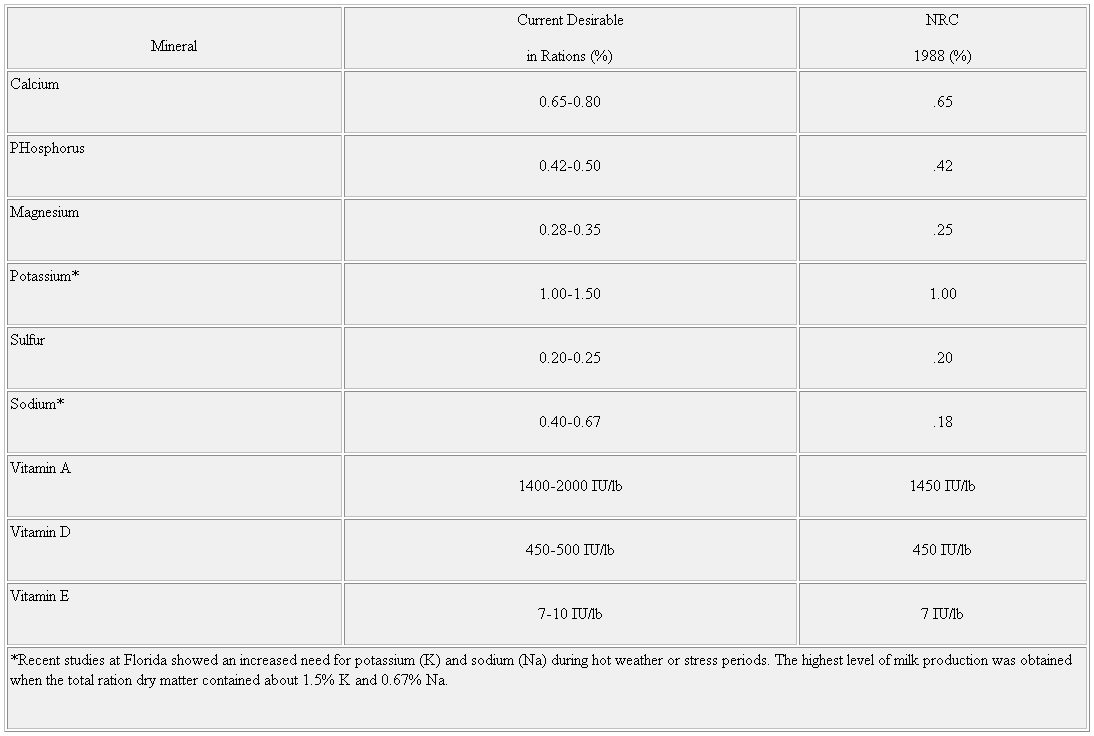
Considerable research has been done to establish the mineral needs of high producers and to define the role of minerals in nutritional biochemistry. Table 2 shows the current levels of the major or macro minerals recommended for dairy cattle rations.
TRACE MINERALS AND VITAMINS
The addition of trace minerals and certain vitamins to dairy cattle rations is usually considered to be good nutritional insurance. However, the question arises: which trace minerals to add and how much of each. The trace minerals deserving some consideration as possible additions to dairy rations are shown in Table 3 . Trace minerals are needed by the dairy animal in very small quantities (parts per million). For this reason, salt is commonly used as a carrier for all the trace minerals.
Trace minerals should not be added to dairy rations indiscriminately. Many rations will contain adequate levels with or without their addition. If a trace mineral problem is suspected, examine the situation carefully and make appropriate adjustments in the mineral mixture. Too much of a particular mineral could further antagonize the situation.
Vitamins deserving consideration under Florida conditions are vitamins A, D and E. A 1400 lb cow consuming 40 lbs of dry matter daily needs about 65,000 USP units of vitamin A, 18,000 units of Vitamin D and 280 units of vitamin E. Dry cows should receive about 50 to 100,000 units or more of vitamin A per day when green forage is not available and 20,000 units or more per cow per day if green forage is available.
Certain stress factors, such as hot climate, nitrate in feeds, disease, and lactation may increase the vitamin A requirements of the animal. In order to avoid a vitamin A deficiency in reproduction, the dairy ration should provide from 40,000 to 80,000 USP units of vitamin A. Some dairymen feed little vitamin A during the green forage feeding period and about 100,000 to 150,000 units per cow during hot weather.
TABLES
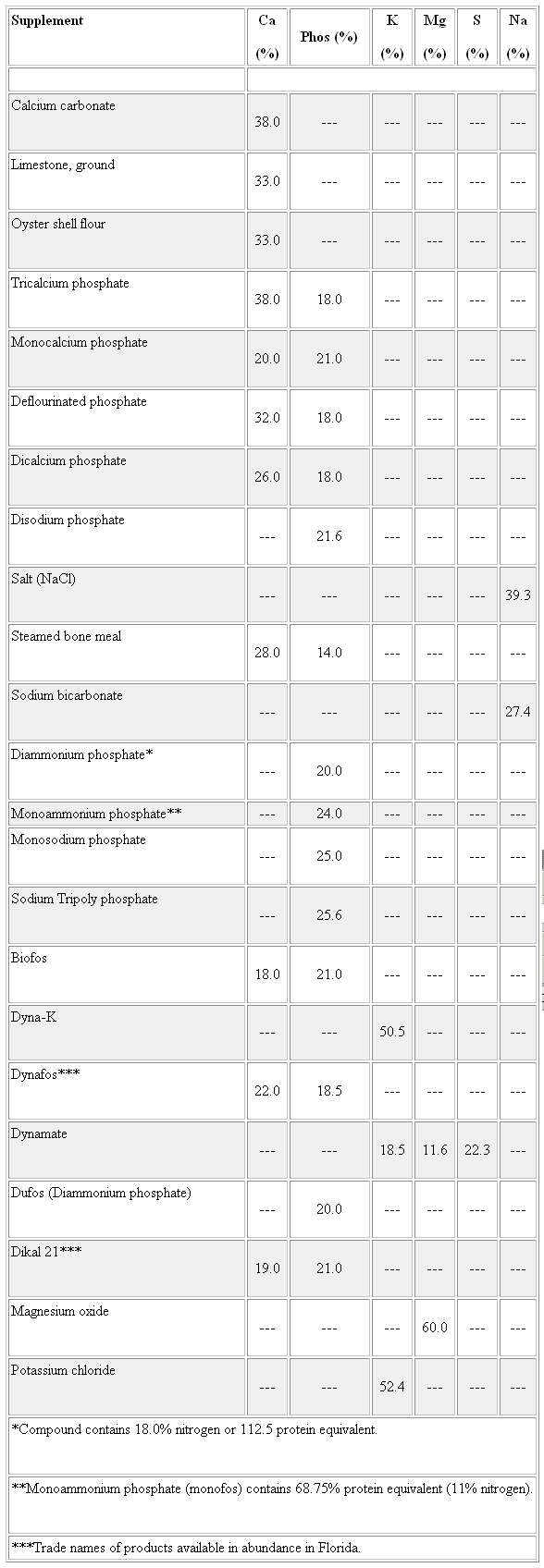
Table 1. Mineral supplements and their mineral composition.
To enlarge the image click here
Table 2. Major mineral and vitamin content recommended in ration for high producers (dry matter basis).
To enlarge the image click here
Table 3. Suggested trace mineral content of rations (DM) for lactating dairy cattle (NRC-1988).

FOOTNOTES
1. This document is DS41, one of a series of the Animal Science Department, Florida Cooperative Extension Service, Institute of Food and Agricultural Sciences, University of Florida. Original publication date August 1992. Reviewed June 2003. Visit the EDIS Web Site at http://edis.ifas.ufl.edu.
2. Professor, Dairy Science Department, Cooperative Extension Service, Institute of Food and Agricultural Sciences, University of Florida, Gainesville.
Related topics:
Recommend
Comment
Share

20 de marzo de 2009
Hi
This means that they need to be dissolved in liquid (water) in order for them to be available to the body. Mineral deficiencies are generally due to a nutrient poor diet or an inability to absorb ingested minerals. Calcium is the most abundant mineral in the body.
Instead of first respecting the natural alchemy of minerals and health,and restoring the optimal of the body it employs powerful but inappropriate drugs to treat disease.
Thanks...
Recommend
Reply
26 de enero de 2008
This article is useful no doubt on it. But I would to ask a to the author, which form is easily to the animals whether it is inorganic and/or organic?
Recommend
Reply
25 de enero de 2008
I am unable to read the tables. Their print is too small.
Recommend
Reply
25 de enero de 2008
You must click on the table, and when the new window appear, you must click on the magnifying glass or the icon to enlarge the table, which will appear over the image. You will be able to see the numbers perfectly.
Engormix.com Staff
Recommend
Reply

24 de enero de 2008
The level of Na and K seems to be very high and increase concentrate ration cost. We fed Cameroon grass (tall grass, pasto elefante) as a forage for dairy cows (25 lts/day milk) in a very hot and humid environment. Are these levels recomended to use? (0,4 -0,67% Na 1,5% K). How can I supply K since my mineral salt does not content enough K? Na content of the forage is about 0,01% (by reference) and calcium 0,12% (by laboratory). Are these values similar to your forage?
Thanks.
Luis Gulino
Recommend
Reply

24 de enero de 2008
The theme of the paper is certainly useful, however the data is clearly out of date. Why cite NRC standards from 1988 when NRC published new guidelines in 2001?
Don Sanders D.V.M., Dip ACT, PAS
Associate Professor, Clinical
The Ohio State University Large Animal Field Service
Marysville, OH
Recommend
Reply

24 de enero de 2008
The article carries good information. My question to the author is which is the best form of supplementing these trace minerals as we have inorganic and organic form in the market.
Recommend
Reply
Would you like to discuss another topic? Create a new post to engage with experts in the community.






Featured users in Dairy Cattle





José Manuel Oropeza Meza
MSD - Merck Animal Health
Gerente Nacional Cuentas Clave en MSD Salud Animal
United States
United States